Telecommunications infrastructure delivery from comms-room fit-outs through to remote relay sites — including the logistics, mobilisation and commissioning that the brochure rarely mentions.
Comms-room construction and fit-out. Fibre and copper structured cabling. Relay infrastructure. Wireless and microwave links. Remote site mobile network deployment. Tower commissioning. Integrated power and cooling for comms infrastructure.
Telecommunications projects are commonly multi-disciplinary — power, cooling, comms and site infrastructure all moving together. We coordinate the disciplines under one project lead so the program holds, documentation aligns and commissioning is sequenced properly.
Remote relays, offshore sites and difficult-access infrastructure are a regular part of our scope. Mobilisation, logistics, on-site safety and commissioning planning happen well before crews land — that planning is what makes remote delivery achievable.
Yes. Remote mobilisation — including Pacific deployments, offshore sites and regional-Queensland infrastructure — is part of our standard scope. We plan the logistics: shipping schedules, freight routes, accommodation, on-site safety and commissioning sequencing. Remote work is rarely just about the tradie on site; it's the planning that wraps around them, and we've done it enough times to know what trips a project up.
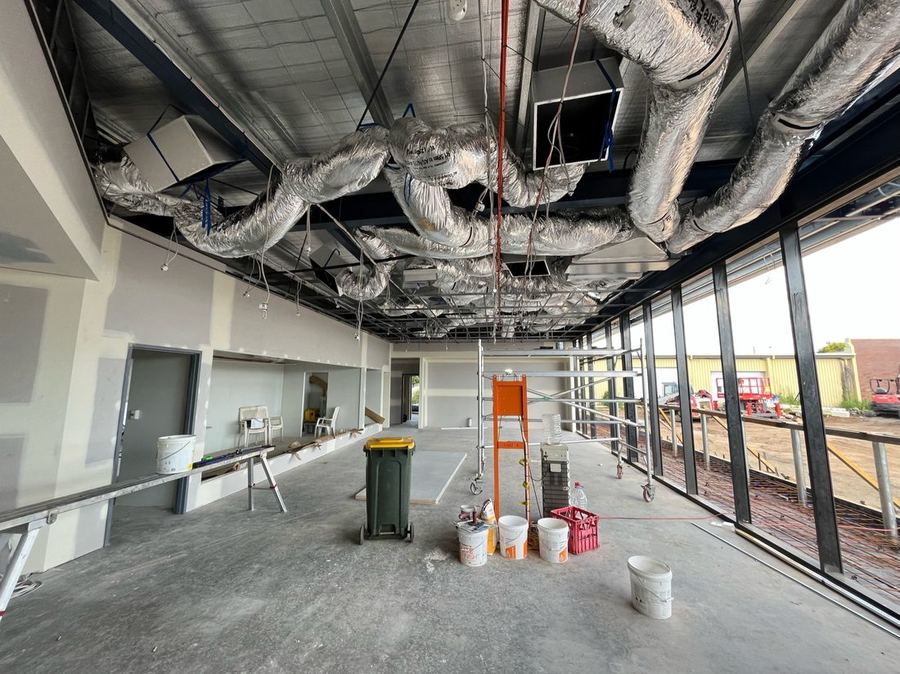
Comms rooms — racks, cable management, power distribution, structured cabling. Fibre pathways and splice work. Wireless and microwave links. Tower-mounted relay equipment. Integrated cooling and critical power for comms infrastructure. We handle the work end-to-end, including the supporting electrical and HVAC-R that telecommunications infrastructure typically depends on.
Yes. Commissioning is part of the scope on every telecommunications job we deliver. That means signal tests, link verification, redundancy and failover checks, as-built documentation and commissioning reports issued at handover. We don't hand a site back without the testing being done and recorded.
Our cablers carry the relevant ACMA registrations and our work meets the AS/NZS 3000 and AS/NZS 3080 / 11801 standards as applicable. Specific compliance requirements (carrier networks, healthcare, government) are scoped in writing on a per-project basis so the certification trail is unambiguous.
Yes. Night operations and weekend works are common on telecommunications projects — relay commissioning often has to happen during outage windows that don't fit normal business hours. Programming, lighting, on-site safety and crew rotation are scoped against the outage window.
Yes. Multi-site rollouts are part of our project portfolio — including regional Queensland and Pacific deployments. The model is one project lead, a documented program covering every site, mobilisation logistics, and commissioning sequenced site-by-site so the rollout holds together. Reporting is consolidated so the client sees one view of progress, not site-by-site fragments.
Talk to a discipline lead — not a sales handover.
Engage Us