Plaster Repairs
Holes, cracks, water damage — restored to an invisible finish. Logan and Brisbane Southside.
What we do
Seamless plaster repairs, every time
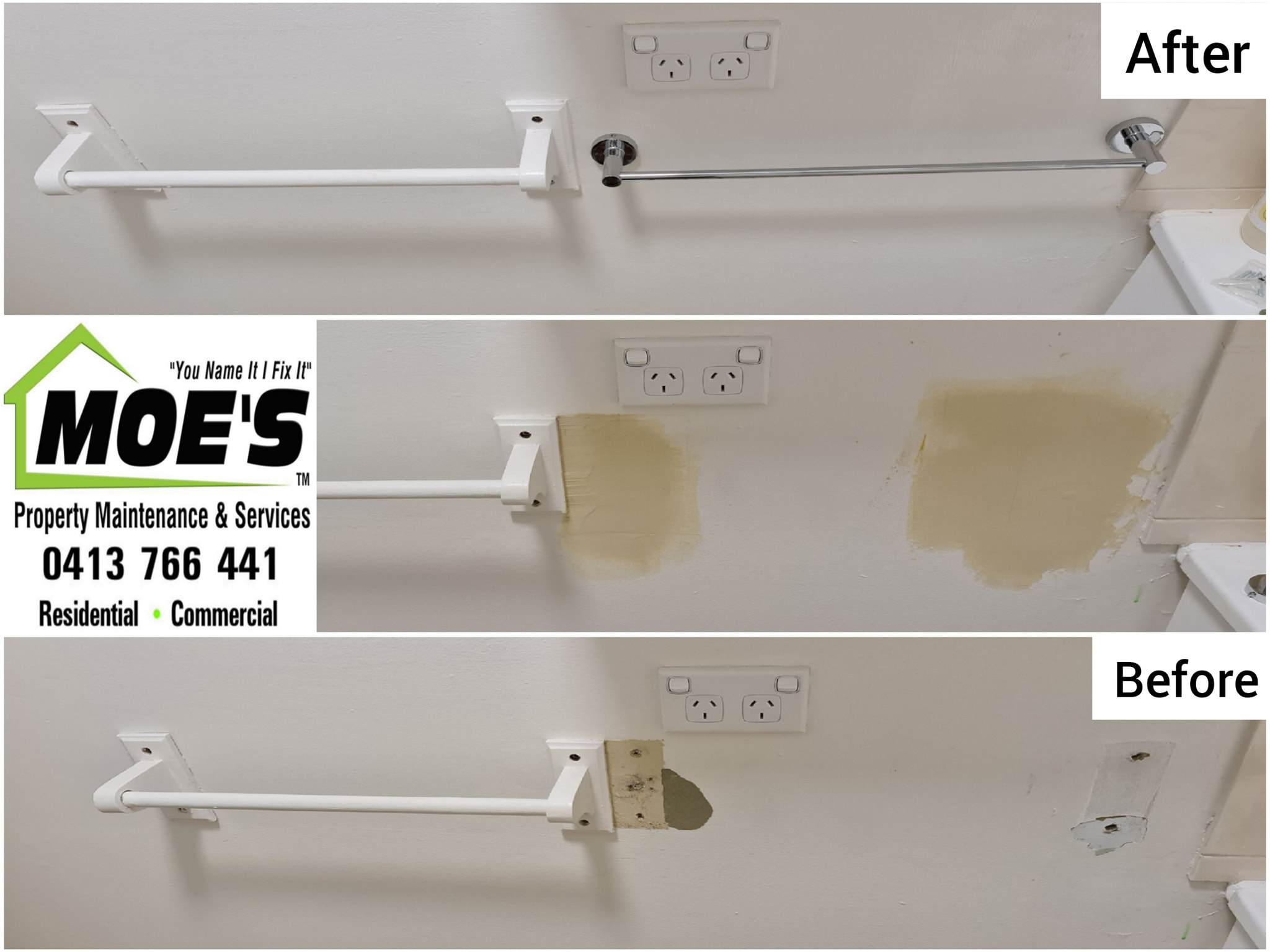
Whether it's a doorknob hole, cracked ceiling, or large section of water-damaged plasterboard, Moe repairs it properly — filled, set, sanded, and painted so you can't tell it was ever there.
A favourite for property managers needing repairs done between tenants, and homeowners wanting walls restored before repainting or selling.
Small holes — nail holes, screw pops, anchors
Large holes — doorknob impact, accidental damage
Wall and ceiling cracks (hairline to wide)
Water-damaged plaster and plasterboard
Texture matching to blend with surrounding wall
Prime and paint over repair on request
Get a Free Quote
Send a photo of the damage — Moe will quote you fast.
Common questions
Plaster Repairs FAQ
What size holes can you repair?
From small nail holes and screw pops right up to large sections of damaged plasterboard. Moe patches and sets compound in layers to build back a smooth, flat surface regardless of hole size.
Will the repair be visible after completion?
No — when properly finished and painted, a plaster repair is invisible. Moe feathers the compound edges so there's no ridge or bump, and can paint over the repair to match the existing wall.
Can you match existing wall texture?
Yes. Whether the wall is flat, lightly textured, or has a skip-trowel finish, Moe replicates the surrounding texture so the patch blends in seamlessly.
How long does plaster take to dry?
Joint compound dries in 24–48 hours per coat depending on thickness and humidity. Most repairs need 2–3 coats with drying time between each. Total repair time is typically 1–3 days.
Do you paint over the repair?
Yes. Moe primes and paints over repairs as part of the job. For touch-ups he colour-matches to the existing wall as closely as possible.
Can water-damaged plaster be repaired?
Often yes, provided the moisture source has been fixed first. Moe assesses the damage, removes any unsound plaster, treats for mould if present, and replaces with fresh plasterboard or compound.
What causes cracks in walls and ceilings?
Most cracks are caused by normal building movement — seasonal expansion and contraction of the timber frame. Hairline cracks are cosmetic and easy to repair. Wider or recurring cracks may indicate structural movement; Moe will advise if further investigation is needed.
Also available