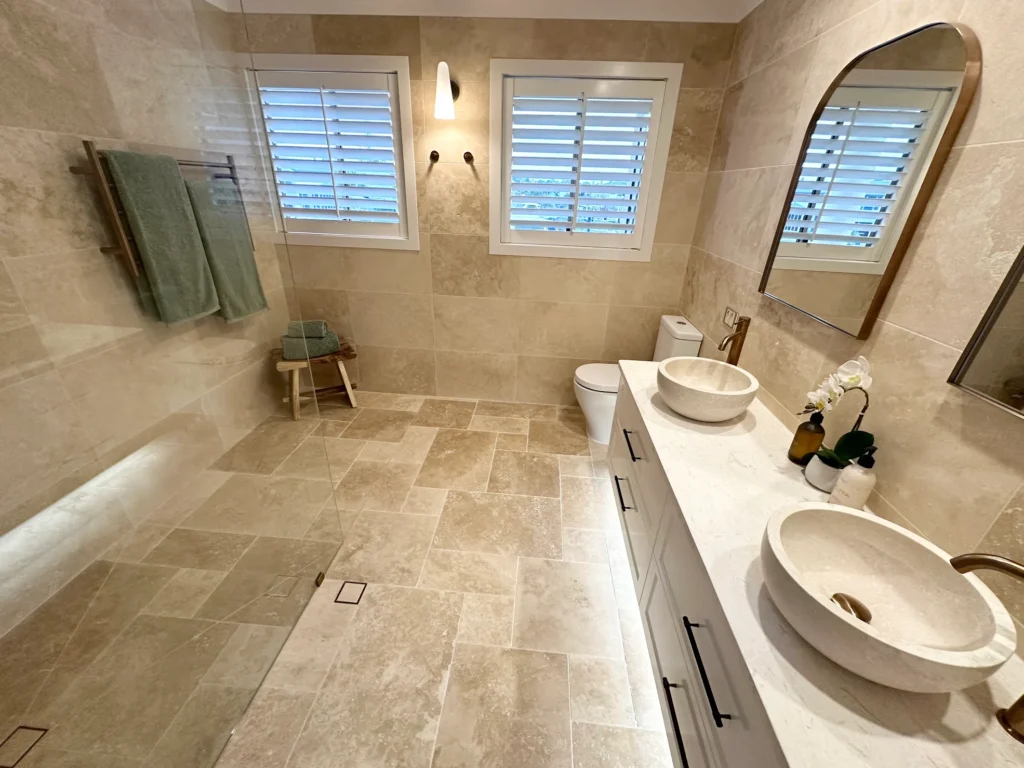
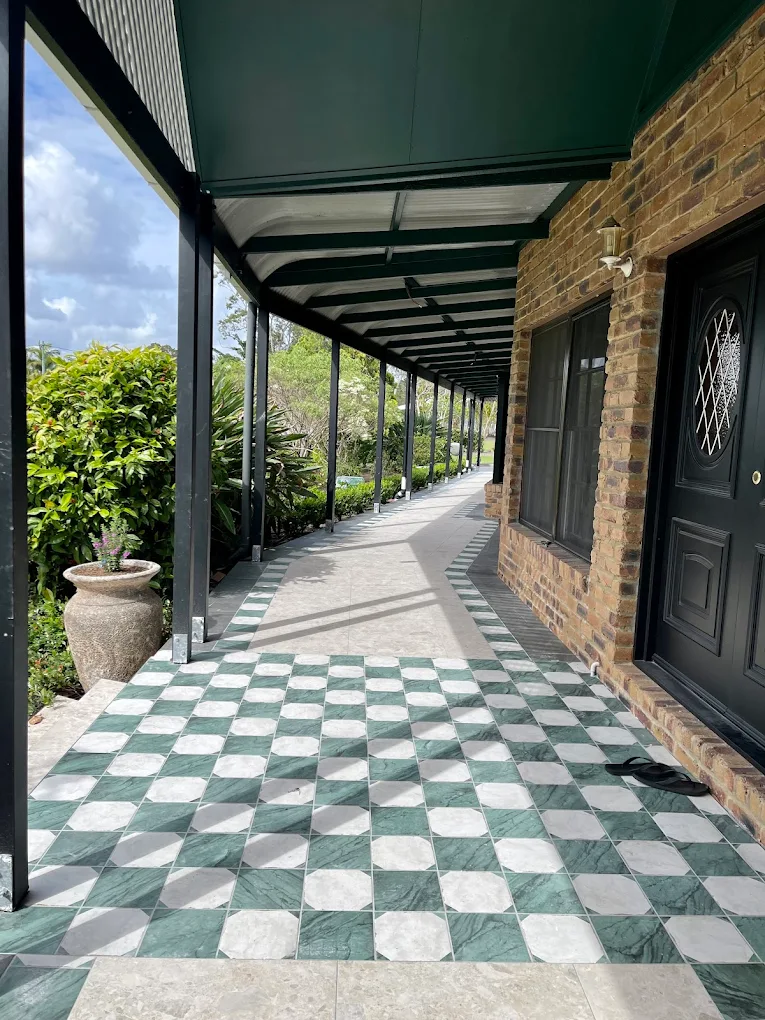
Can the same tile go indoors and outdoors?
Some tiles can — most can't. For an indoor/outdoor flow (where the same tile carries from the living room through to the alfresco) we use a porcelain rated for both, with a slip-resistance grade suitable for outdoors. The look is consistent but the trade decision matters: an internal-only ceramic outdoors will lift, crack or get slippery in the wet. We'll show you specific options at the quote.
What's the slip-resistance rating you'd recommend for an alfresco?
For an outdoor entertaining area we typically suggest a P3 or P4-rated porcelain — that's slip-resistant enough for the wet but not so textured it's hard to clean. Pool surrounds and shower floors usually want P4 or P5. We'll talk through ratings during the quote and show you actual sample tiles so you can feel the texture.
How do you handle the substrate for outdoor tiling?
Outdoor substrates need to drain and they need to move. Concrete slabs need to be ground if there's a sealer or paint, primed with the right outdoor primer, and tiled with a flexible adhesive rated for movement. Timber decks aren't suitable for direct tiling — they need a tile underlayment system. We'll assess the substrate at the quote stage; if there's prep work, it's listed separately.
Will tiles work over my existing paving?
Sometimes. Existing pavers can host new tile if they're solid, level, well-drained and bonded to the slab — but more often we find drainage falls aren't right or the paver is delaminating. The honest answer is we'd need to see it. If overlaying isn't viable we can discuss a strip-out, or laying new tiles on a fresh screed at the right falls.
What's the maintenance like for outdoor tile?
Outdoor porcelain is low-maintenance: a hose-off and a soft-bristle broom for the most part. Stone (travertine, bluestone) needs sealing every couple of years to keep it looking fresh and to resist staining. We talk through maintenance at the quote — if you're after zero-effort, porcelain is the call; if you want the natural-stone aesthetic, a sealing routine is part of the package.
Can you do steps, transitions and edge profiles?
Yes — steps, level transitions (e.g. living room to alfresco), pool coping and feature edges are all part of indoor/outdoor work. Mitre joints look the cleanest but cost more in labour; edge trims (Schluter aluminium, etc.) are a tidy alternative. We'll detail the edges in the quote so there's no surprise.