What is a French pattern, exactly?
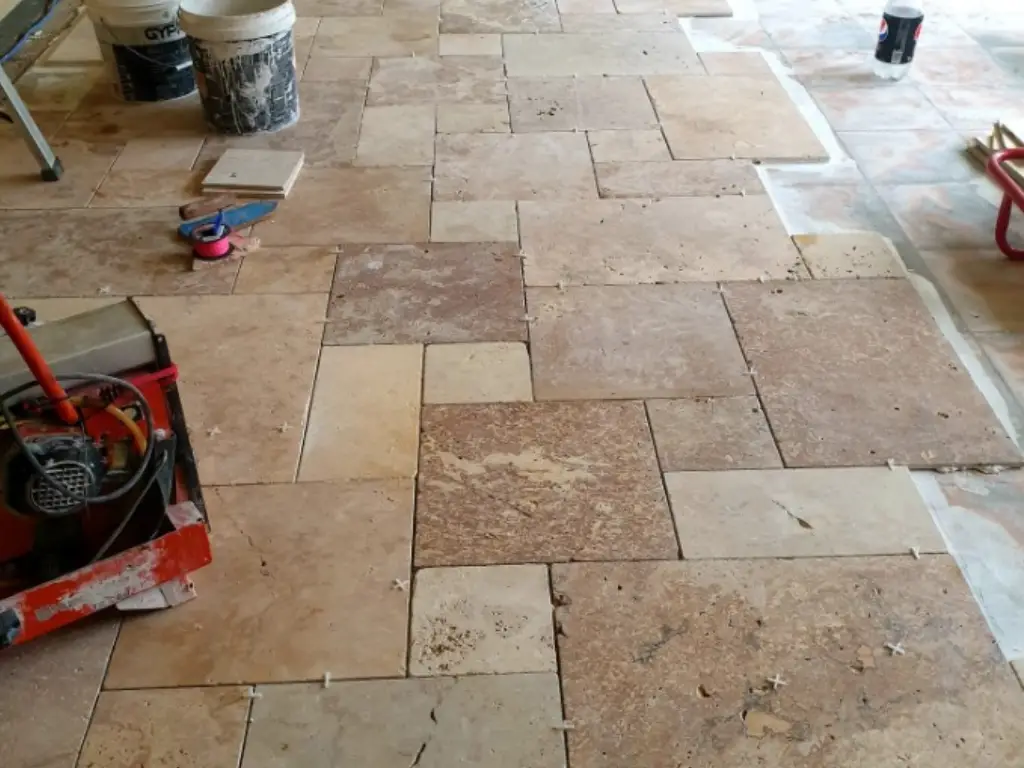
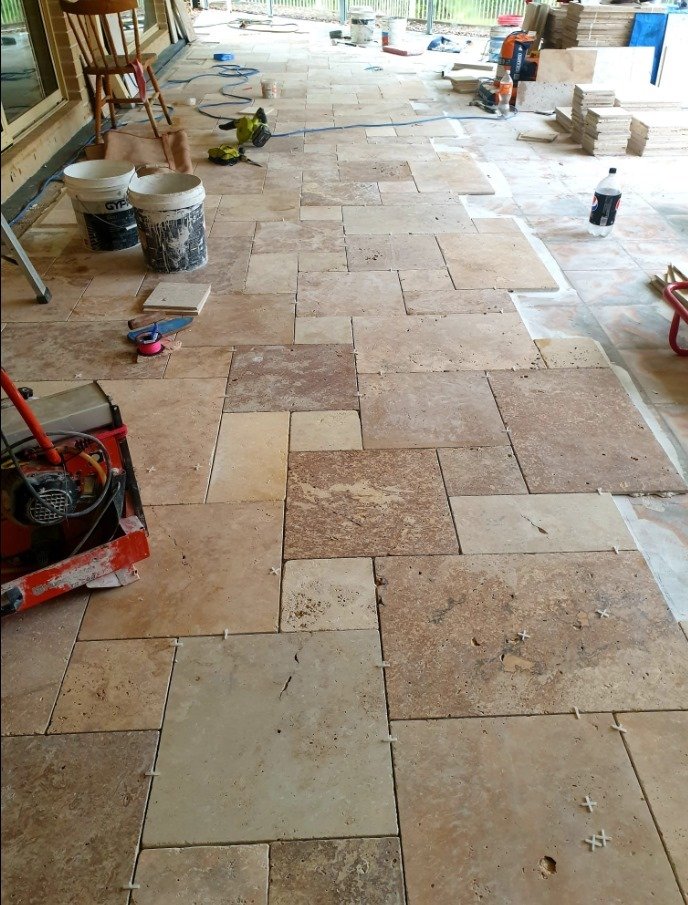
French pattern is a four-tile set with specific size ratios — typically a small square, a medium square, a tall rectangle and a wide rectangle — that repeats to fill an area without an obvious grid. It's classic for travertine on pool surrounds, alfrescos and entry foyers. The result is a relaxed, organic finish that doesn't lock you into straight lines or square corners.
Can French pattern be done in materials other than travertine?
Yes. Most French-pattern installs use travertine because the look is iconic, but we've laid French pattern in porcelain, limestone and bluestone. Porcelain French-pattern sets are widely available now and they handle pool chemicals better than stone. The pattern is the same; only the material changes.
Is French pattern slippery around pools?
It depends on the material and finish. Travertine has natural slip-resistance and is fine wet. Honed marble or polished porcelain shouldn't go around pools. We'll match the slip-resistance rating to the location — French pattern tiles in P4 or P5 porcelain are widely available for pool decks.
How does French pattern affect cost?
Slightly more than a square format, mainly because the layout planning takes longer and the cuts at edges are more involved. The tile material itself is similar pricing per square metre. We typically allow a small extra for waste — French-pattern jobs need a bit more material headroom because the pattern locks in tile orientation.
Will it work in a small space like a courtyard?
Yes — but the scale of the pattern matters. A standard French-pattern set looks great in 15+ square metres; in a 4-square-metre courtyard the pattern barely repeats and can look fragmented. For small areas we'll usually suggest a scaled-down French set or a different layout that suits the space.
How long does a French-pattern install take versus a standard format?
Allow about 15–25% more time on the install. The dry-lay is critical (we balance the pattern across the whole area before any adhesive goes down), cuts at the perimeter need more attention, and the grouting goes slower because the joints aren't all parallel. The pay-off is a finish you can't get with square tiles.