
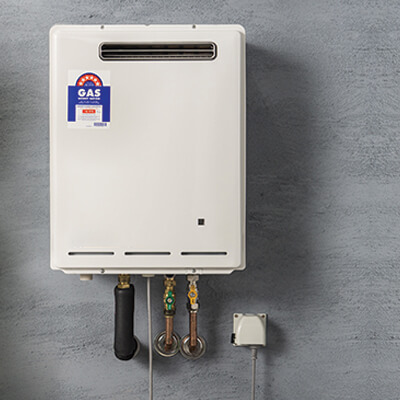
Repair-or-replace, honestly assessed
Most hot water systems run 8–12 years. Beyond that, repair cost rarely makes economic sense. We'll diagnose, tell you honestly which side of the line your unit is on, and quote both paths — repair this time, or like-for-like replacement, or upgrade to instantaneous gas or heat pump — so you can choose with the numbers in front of you, not just our recommendation.
Heat pump & solar — when they pay back
Heat pump and solar hot water cost more upfront but cut running costs to roughly a third of electric resistive storage. With STC and Queensland rebates the net cost gap is smaller than the sticker price suggests. We do the rebate paperwork as part of the install and show you the net price in writing. For most Brisbane households on grid electricity, the payback period is shorter than the warranty.
Same-day replacement (usually)
Standard electric storage and gas storage in common sizes — usually same day if you call in the morning. Heat pump, premium instantaneous, oversized commercial — usually 1–3 day lead time from order. If you're without hot water entirely, call us; we'll get a temporary or like-for-like in fast.
Who we work with
Residential
Electric storage, gas storage, instantaneous gas, heat pump, solar — repair or replace.
Multi-unit
Apartment and townhouse hot water — central plant or individual unit upgrades.
Rebate-eligible
STC and Queensland rebate paperwork handled for heat pump and solar upgrades.
Questions, answered.
Six to eight evergreen Q&As — the things customers actually ask before booking us for hot water systems.
Should I repair my hot water system or replace it?
Most hot water systems run 8–12 years on average — beyond that, repair cost usually doesn't make economic sense versus replacement. Common repair-or-replace flags: visible rust on the tank, water around the base, the system not heating fully, the system tripping the safety switch, or it being a brand and model no longer supported for parts. We'll diagnose, tell you honestly which side of the line your unit is on, and quote both paths so you can choose.
What hot water options should I consider?
Four main paths: traditional electric storage (cheapest upfront, highest running cost), gas storage (if gas is connected — moderate upfront and running cost), instantaneous gas (no tank, only heats on demand — high upfront, low running cost, near-endless hot water), and heat pump or solar (highest upfront, lowest running cost, government rebates available). For Brisbane's climate, heat pump and solar are increasingly the right answer financially — we'll show you the running-cost numbers on a quote.
How quickly can you replace a unit that's failed?
Same day for common units we keep in stock — electric storage and standard gas storage in popular sizes. Specialty units (heat pump, premium instantaneous, oversized commercial) usually involve a 1–3 day lead time from order. If you're without hot water entirely, call us and we'll get a temporary or like-for-like in as fast as we can.
Are heat pump rebates worth it?
Often yes — federal small-scale technology certificates (STCs) and Queensland-specific rebates can cut the upfront cost of a heat pump or solar hot water system by a meaningful chunk. We handle the paperwork on the rebate side when we install the unit, and we'll show you the net price after rebates in writing. The running-cost saving (heat pump uses roughly a third of the electricity of resistive storage) usually pays the difference back within a few years.
Can you install a hot water unit that requires both gas and electrical work?
Yes — that's the main reason customers like that we run both trades in-house. A gas instantaneous unit needs gas line work and a power circuit; a heat pump needs only electrical but it's a high-amperage circuit that often wants a switchboard look. Doing both in one visit, by one team, with one quote, is faster and cheaper than booking a plumber and a sparky separately.
Do you provide a warranty on hot water installations?
The manufacturer's warranty applies to the unit itself (typically 5–10 years on the tank, 1–3 years on parts depending on brand and model). Our installation labour is covered separately by our workmanship — if a fitting we installed leaks or the install caused an issue, we come back and fix it. We'll detail the warranty terms in writing on the quote and the invoice so it's clear which part the manufacturer covers and which part we do.
Can you service my existing system to extend its life?
Yes — periodic servicing (replacing the sacrificial anode in storage tanks, flushing the tank, checking pressure-relief valves, gas burner servicing on gas units) can add years to a unit that's not yet at the replace-now threshold. Worth doing on storage tanks at year 5 if you've never serviced. Doesn't make economic sense once a unit is past 10 years and showing replacement flags — at that point service money is better spent toward the replacement.